
Have you ever looked at your travertine pavers and wondered why they’ve lost their original lustre? Perhaps you’re noticing white patches appearing, or maybe stubborn stains that just won’t budge? You’re certainly not alone in this, and the good news is that with the right techniques, your natural stone can look stunning for decades to come.
Travertine pavers are a gorgeous investment for any Australian home, whether they’re surrounding your pool, creating a beautiful patio, or forming elegant pathways. However, this natural stone requires a bit more TLC than your average concrete paver. Understanding how to properly care for travertine means you’ll protect both the beauty and the value of your outdoor spaces.
In this guide, we’ll explore everything from daily cleaning routines to professional restoration options. You’ll learn how to tackle those pesky oil stains, understand when and how to seal your pavers, and discover tips for dealing with Australia’s harsh weather conditions. By the end, you’ll have all the knowledge you need to keep your travertine looking absolutely brilliant.
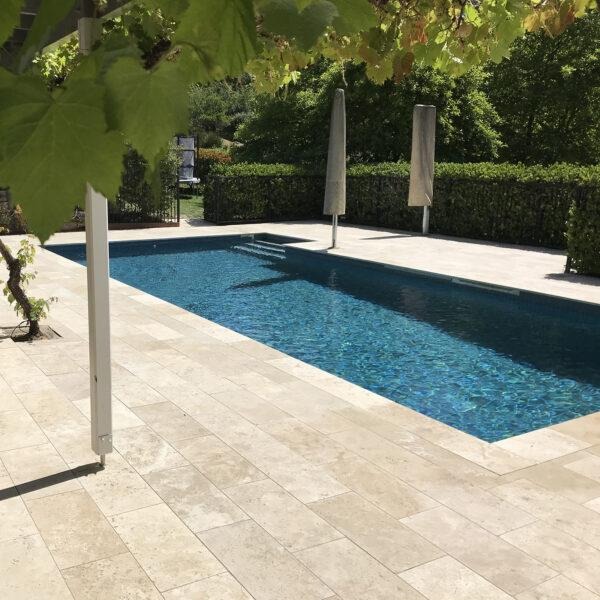
Why Travertine Requires Specialised Care
Travertine is a unique natural stone formed in hot springs and limestone caves over thousands of years. This fascinating origin story also explains why it needs special attention. The stone is naturally porous, featuring tiny holes and channels throughout its surface that can trap dirt, absorb liquids, and harbour organic growth if left unprotected.
Unlike manufactured materials, each travertine paver has its own character, complete with natural variations in colour, texture, and porosity. This means a one-size-fits-all cleaning approach simply won’t cut it. Acidic cleaners that work perfectly on other surfaces can actually etch and damage travertine, leaving permanent marks that are incredibly difficult to repair.
Plus, Australian conditions pose particular challenges. Our intense UV exposure, dramatic temperature swings, and coastal salt air all take their toll on natural stone. Understanding these unique properties helps you choose the right maintenance approach for your specific situation.
Essential Daily and Weekly Maintenance Routines
The best way to clean travertine pavers starts with prevention. A quick sweep with a soft-bristled broom every few days removes loose debris before it gets ground into the stone’s surface. This simple habit takes just minutes but prevents countless problems down the track.
For weekly cleaning, use a pH-neutral stone cleaner mixed with warm water. Avoid standard household cleaners, vinegar, or lemon-based products as these are too acidic. Apply the solution with a soft mop or cloth, working in sections and rinsing thoroughly with clean water afterwards.
How often should you clean outdoor travertine? It really depends on usage and location. Pool surrounds typically need more frequent attention due to sunscreen, body oils, and chlorinated water splashing onto the surface. High-traffic areas might benefit from twice-weekly cleaning, while less-used sections can often get by with weekly maintenance.
Deep Cleaning Techniques for Stubborn Stains
So, how do you remove stains from travertine pavers when regular cleaning isn’t enough? The key is identifying the stain type and using the appropriate treatment. Oil and grease marks around pool areas respond well to a poultice made from baking soda and water. Apply a thick paste, cover with plastic wrap, and leave overnight before gently removing.
Tackling organic stains from leaves, algae, and mould requires a different approach. A diluted hydrogen peroxide solution works wonders without damaging the stone. For stubborn algae growth, consider a specialised stone algae remover designed specifically for natural stone applications.
Can you use a pressure washer on travertine? Yes, but with extreme caution. Keep the pressure below 1500 PSI, use a wide fan nozzle, and maintain at least 30 centimetres distance from the surface. Higher pressure can pit the stone, damage grout lines, and force water beneath the pavers, causing long-term problems.
Sealing Your Travertine Pavers: The Ultimate Protection
Does travertine need to be sealed? Absolutely, especially for outdoor installations in Australia. Sealing creates an invisible barrier that prevents liquids, oils, and stains from penetrating the stone’s porous surface. It also helps protect against salt damage and makes routine cleaning significantly easier.
How often should travertine pavers be resealed? Most quality sealers last between two to five years, depending on traffic levels and weather exposure. A simple water test helps determine when resealing is needed—if water soaks into the stone rather than beading on the surface, it’s time for a fresh application.
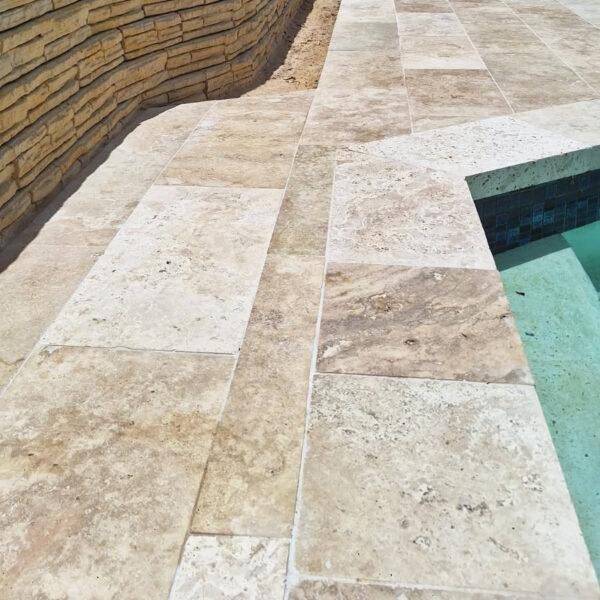
When choosing between penetrating sealers and topical sealers, consider your priorities:
Penetrating sealers: absorb into the stone, providing invisible protection whilst maintaining the natural appearance and slip resistance
Topical sealers: sit on the surface, offering enhanced colour and a wet-look finish but potentially reducing grip when wet
For outdoor areas, especially pool surrounds, penetrating sealers are generally the safer choice.
Repairing Chips, Cracks, and Surface Damage
How do you fix cracked travertine pavers? Minor chips and small cracks can often be repaired using colour-matched epoxy filler. Clean the damaged area thoroughly, apply the filler slightly proud of the surface, and sand smooth once cured. For tumbled travertine with natural holes, specific pitting fillers are available that blend seamlessly with the stone’s character.
Knowing when to DIY versus calling a professional stone restoration expert is crucial. Small surface repairs are manageable for handy homeowners, but extensive cracking, deep staining, or structural issues warrant professional attention. A qualified stone specialist has access to commercial-grade products and techniques that simply aren’t available to consumers.
When addressing natural holes in tumbled travertine, decide whether you want to fill them or embrace the rustic aesthetic. Many homeowners appreciate the natural character these features provide, whilst others prefer a smoother, more uniform surface for easier maintenance.
Preventing Common Travertine Problems
How do you stop travertine from turning white? This common issue, called efflorescence, occurs when water moves through the stone and deposits mineral salts on the surface. Prevention involves proper sealing, ensuring adequate drainage beneath your pavers, and avoiding overwatering nearby garden beds.
Preventing efflorescence and salt damage requires attention during installation and ongoing maintenance. Make sure your pavers have appropriate fall for water runoff, and consider using efflorescence-blocking sealers if you’re in a coastal area or region with hard water.
Protecting pavers from Australian weather extremes means adapting your maintenance routine seasonally. Our harsh summers demand UV-protective sealers, whilst cooler, wetter regions need products that allow moisture to escape from within the stone whilst preventing water ingress from above.
Seasonal Maintenance Tips for Australian Climates
Preparing your pavers for summer heat and UV exposure starts in early spring. Reseal if necessary, deep clean to remove any winter build-up, and trim back vegetation that might drop leaves or create shaded damp spots. Summer’s intense sun can fade unsealed travertine, so proper protection is essential.
Winter care and managing moisture in cooler regions requires a different focus. Ensure drainage channels remain clear of debris, remove fallen leaves promptly to prevent organic staining, and check for any damage from summer use that needs attention before wet weather arrives.
Professional Maintenance: When to Call the Experts
Signs your travertine needs professional restoration include widespread staining that won’t respond to home treatments, significant etching or surface damage, and grout deterioration throughout the installation. Additionally, if your pavers have become noticeably uneven or are showing structural movement, professional assessment is wise.
What to expect from a stone maintenance service includes thorough assessment, deep cleaning using commercial equipment, professional-grade sealing, and any necessary repairs. Quality providers will also offer maintenance recommendations tailored to your specific installation and local conditions.
Keeping Your Investment Looking Beautiful for Years
Maintaining your travertine pavers doesn’t need to be complicated or time-consuming. Regular sweeping, proper cleaning with pH-neutral products, and timely resealing form the foundation of effective care. When stains occur, acting quickly with the right treatment prevents permanent damage.
Understanding your specific situation matters enormously. Pool surrounds face different challenges than garden pathways, and coastal properties need different approaches than inland installations. By tailoring your maintenance routine to your circumstances, you’ll achieve far better results with less effort.
Your travertine pavers represent a significant investment in your home’s beauty and value. With the techniques we’ve explored today, there’s no reason they can’t look absolutely stunning for twenty years or more. So grab that soft broom, find a quality pH-neutral cleaner, and give your natural stone the care it deserves. Your future self will definitely thank you for it!